Search This Blog

Monday, October 26, 2015

Day 37 - Monday

U.S. History I - Periods 2, 5, and 6: 
Essential Question:
-How did the French and Indian War help inspired a sense of unity and shared identity among the colonist?
-Were the colonist justified in resisting British policies after the French-Indian War? 
-Was the American War for Independence inevitable?
-Would you have been a revolutionary in 1776? 

Themes: Patriotism, Dawn of the Revolution, Propaganda, Revolution

1. Students will answer the following essential question: What are the major ideas expressed in the Declaration of Independence? using Breakout Groups A, B, and C as they finish there presentations on the interpreted main ideas and summaries of The Declaration of Independence. Everyone in the group will be responsible for teaching a segment of their section of the DOI.  Your groups (A, B, and C) for the Declaration of Independence group activity will have 5-10 minutes to prepare at the beginning of class.  You need to make sure that people from every angle of the classroom can SEE your work and HEAR you present. 

2. We are going to go even further in the purpose behind the Declaration of Independence answering the question: Why did the Founding Fathers write the Declaration of Independence?

We will analyze 2 different Historians perspectives and answer the following questions:

-Do you think the Declaration of Independence was written for selfish or ideological (concern with ideas) reasons?

-Do you think the grievances would give people reason to go to war and possibly die? Why or why not?

B. We will discuss the The American Declaration of Independence.   Please download Should We have Declared Independence? and we will break this down into 2 parts to understand how the colonist and loyalist felt in America.


3. Thomas Paine's Common Sense
-Archives and brief statement
-Thomas Paine's Common Sense broken down into 4 parts
-The New Yorker and Thomas Paine's Controversy

4. Olive Branch Petition and 3 questions to consider
-The actual Olive Branch Petition
-Quick scene from John Adams HBO mini-series on the Olive Branch - John Dickinson versus John Adams

5.  Resources/Handouts:
-Causes of the American Revolution slideshow
- A Timeline and Key Terms
-Interesting facts about the Declaration of Independence
-Declaration of Independence short movie
-Early Battles in the American Revolution
-Major American Petitions for Independence (pages 105-112 in your textbook)

Homework: 
1. Please download Should We have Declared Independence? and complete the packet if you have not completed it in class. Pay very close attention to the essential questions and prepare to answer them for tomorrow's class:
-Why did the Founding Fathers write the Declaration of Independence?

-Do you think the Declaration of Independence was written for selfish or ideological (concern with ideas) reasons?

-Do you think the grievances would give people reason to go to war and possibly die? Why or why not?

2. Please organize your BINDER for a binder check on Tuesday.
___________________________________________________

U.S. HISTORY II - Period 1:

Essential Questions:
-Was it possible for the U.S.A. to maintain neutrality in World War I?
-Should the United States fight wars to make the world safe for democracy?
-Was the treaty of Versailles a fair and settlement for lasting world peace?

Themes: Historical thinking methods, evaluating sources, Thinking like an historian, PEGS (Political, Economic, Geographic, Social), The Beginning of the Progressive Era

1. A quick review of "The Spark", The Archduke is Dead and then we will focus on how the fighting starts, Trench Warfare, and America's early decisions to execute neutrality. Where and Why does fighting start in WWI?

2. Trench Warfare will be explained and examined for a few minutes.
Maps & Battles
The "spark" - Car they were driving
World War I Map Series
Trench Warfare/Stalemate
Trenches in World War I
Read about Life in the Trenches
Trench Warfare - Why, How, Life in Trenches, Pictures, Diagrams
WWI Life in the Trenches
PBS.org Trench Warfare and video footage

3. Please download America background knowledge in WWI & the WWI Entry Slideshow

4. Please download the Why did the U.S. Enter WWI? Then take a stand on a hypothesis on the U.S. entry into World War I, supported by specific evidence. Which reasons do you find most compelling?  Highlight or list the supporting documents/evidence that supports your claims.

5. We are going to introduce America's status and role in World War I.  Our focus will be on Woodrow Wilson views in 1914 versus 1917, and historian Howard Zinn's perspective. Why did the U.S. Enter the War?

6. World War I - Long video, but INCREDIBLE storytelling!  You will not be able to watch in one sitting, but over the course of a few days, this would be the one to watch!


7. World War I Resources:
World War I  Background - A PBS Special and in-depth study of "The Great War"
World War I - Everything you need to know and one of the BEST WEB RESOURCES!
World War I Maps and early Battles
Interactive Map on Early Stages and Battles of WWI - PBS.org
America Enters the War - Office of the Historian - Whitehouse.gov
American in World War I - A very complete study and great outline explaining in chronological order our history in The Great War.
U.S. in World War I - Good visuals and easy to follow study.

Homework:
1. Please see your Google Classroom for your HW assignments.

2. Please organize your BINDER for a binder check early next week on Monday/Tuesday.
_____________________________________________________

International Studies - Period 7
Essential Questions:1. Is the world safer today with the United Nations than it was in 1945?
2. Is the United Nations an effective peace-keeping organization?
3. What should be done to improve the effectiveness of the United Nations?
4. Does NATO have a new role in the order of international relations in Europe and the World in the 21st Century?
5. Was NATO just or unjust in participating and executing their mission in your post-Cold War scenario?
6. What does "hard power" and "soft power" capability and how does it impact foreign policy?

Themes: Humanitarianism, World Peace, War vs. Peace, Sustainable Change, Non-Government Organizations

1. What is NATO will continue? U.S. State Dept - What is NATO?
The Washington Treaty (aka The North Atlantic Treaty)
What is NATO's mission? Which decisions does it make and why would it be consulted?
-Current NATO missions
-Topics and more on Current NATO missions
-NATO GLOBE MAP


2. NATO special forces Video:


3. What key events has NATO been a part of? What current operations/recent operations have they had and where they successful?

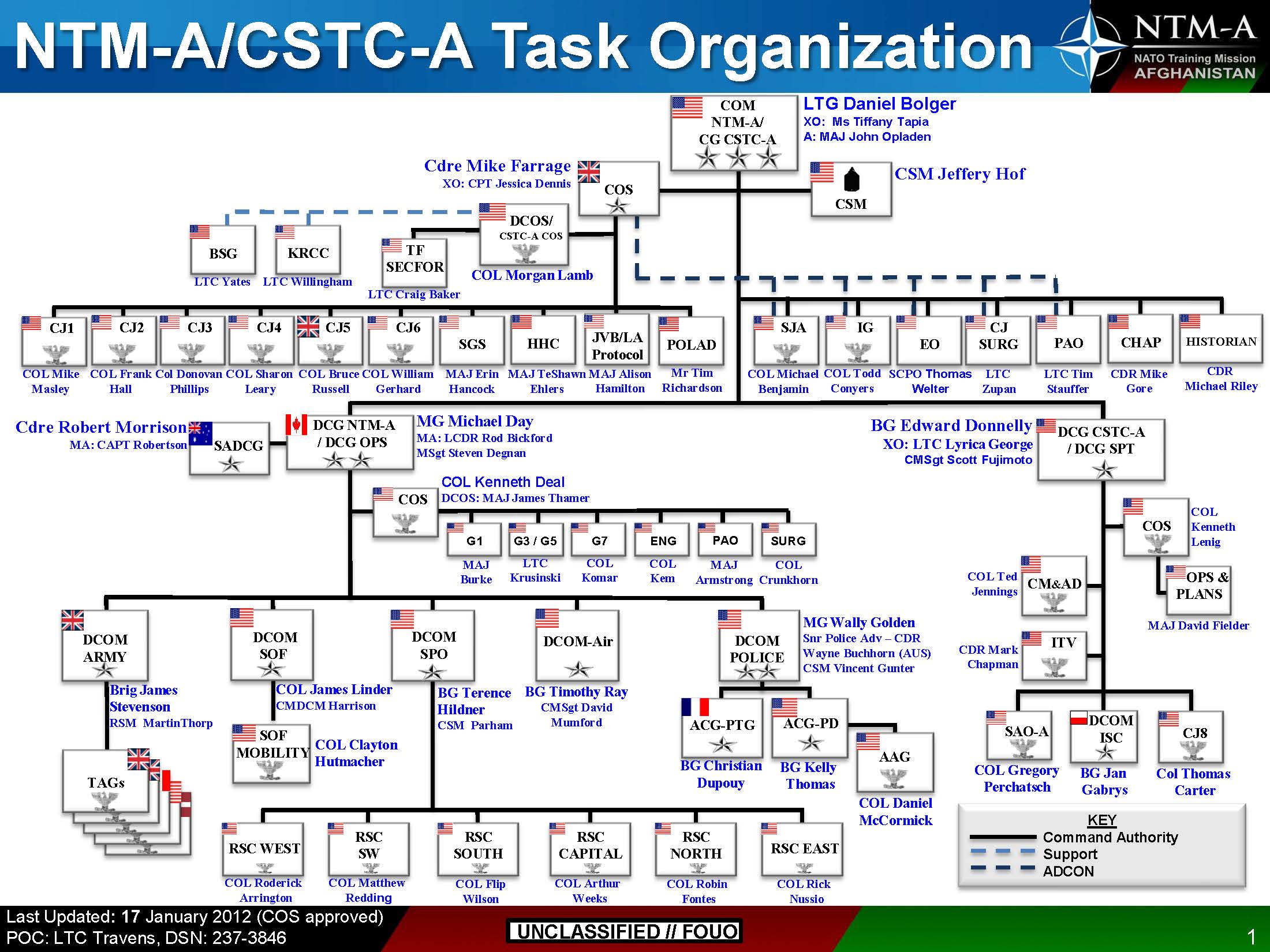
4. Example: NATO in Afghanistan
http://publicintelligence.net/wp-content/uploads/2012/02/NTM-A-OrgChart.jpg
NATO's mission according to the news
Wikipedia's NATO

Homework:
1.  NATO or Peacekeeping Mission Project - Please read carefully over pages 1 & 2 to get an idea of what this project is about. Then make sure you read over pages 3-5 and complete the questions on pages 6 & 7. 

2. Begin researching a recent NATO mission (1992 to present day) going on
-You must have a basic outline on who is involved?
-How long have they been there?
-Why Peacekeepers or NATO troops are there?
-Where and what does the current situation look like?
-What challenges do Peacekeepers or NATO troops face?
-Here is a recent project I have done with students in the past and I am looking for a similar scale example from you all - NATO or Peacekeeping Mission Project

Wednesday, October 21, 2015

Day 34 - Wednesday

U.S. History I - Periods 2, 5, and 6: 
Essential Question:
-How did the French and Indian War help inspired a sense of unity and shared identity among the colonist?
-Were the colonist justified in resisting British policies after the French-Indian War? 
-Was the American War for Independence inevitable?
-Would you have been a revolutionary in 1776? 

Themes: Settlements on the East Coast and Southwest, Colonial life and struggles, Mercantilism, Colony-building, economic relationships

1. Each A, B, and C group will be presenting the interpreted main ideas of The Declaration of Independence. Everyone in the group will be responsible for teaching a segment of their section of the DOI.  Your groups (A, B, and C) for the Declaration of Independence group activity will have 5-10 minutes to prepare at the beginning of class.  You need to make sure that people from every angle of the classroom can SEE your work and HEAR you present. 

2. Periods 2 and 6 SHOULD be prepared to present these group 2-column charts and their examination of the Declaration of Independence.


3. Thomas Paine's Common Sense
-Archives and brief statement
-Thomas Paine's Common Sense broken down into 4 parts
-The New Yorker and Thomas Paine's Controversy

4. Olive Branch Petition and 3 questions to consider
-The actual Olive Branch Petition
-Quick scene from John Adams HBO mini-series on the Olive Branch - John Dickinson versus John Adams

5. Major American Petitions for Independence (pages 105-112 in your textbook)

Homework: 
1. Please organize your BINDER for a binder check early next week on Monday/Tuesday.
___________________________________________________

U.S. HISTORY II - Period 1:

Essential Questions:
-Was it possible for the U.S.A. to maintain neutrality in World War I?
-Should the United States fight wars to make the world safe for democracy?
-Was the treaty of Versailles a fair and settlement for lasting world peace?

Themes: Historical thinking methods, evaluating sources, Thinking like an historian, PEGS (Political, Economic, Geographic, Social), The Beginning of the Progressive Era

1. Please go and find at least TWO CREDIBLE articles on Sinking of the Lusitania, read through them, analyze them, and CREATE AN OUTLINE that prepares you to answer the question below:  You will be writing a response editorial on Friday in-class answering the following question  "Should the United States go to war after the sinking of the Lusitania?" of at least 8-12 sentences as if you were living during 1915.  Your response should include a strong thesis statement and at least 2 quotes from your credible sources. Think PIE when writing your response.

2. Where and Why does fighting start in WWI?

3. World War I Resources:
World War I  Background - A PBS Special and in-depth study of "The Great War"
World War I - Everything you need to know and one of the BEST WEB RESOURCES!
World War I Maps and early Battles
America Enters the War - Office of the Historian - Whitehouse.gov
American in World War I - A very complete study and great outline explaining in chronological order our history in The Great War.
U.S. in World War I - Good visuals and easy to follow study.

4. Videos on Lusitania and WWI:


Sinking of the Lusitania

World War I - Long video, but INCREDIBLE storytelling!  You will not be able to watch in one sitting, but over the course of a few days or a weekend, this would be the one to watch!


4. Trench Warfare
WWI Life in the Trenches
PBS.org Trench Warfare and video footage

Homework:
1. Please organize your BINDER for a binder check early next week on Monday/Tuesday.
_____________________________________________________

International Studies - Period 7
Essential Questions:1. Is the world safer today with the United Nations than it was in 1945?
2. Is the United Nations an effective peace-keeping organization?
3. What should be done to improve the effectiveness of the United Nations?
4. Does NATO have a new role in the order of international relations in Europe and the World in the 21st Century?
5. Was NATO just or unjust in participating and executing their mission in your post-Cold War scenario?
6. What does "hard power" and "soft power" capability and how does it impact foreign policy?


Rwanda Genocide Essential Questions:
1. How did the character of Paul Ruseabagina, as the hotel manager in "Hotel Rwanda" display courage?
2. How does a society recover from a genocide?
3. Does Rwanda have a future?

Themes: Humanitarianism, World Peace, War vs. Peace, Sustainable Change, Non-Government Organizations

1. We will FINISH the Presentations today  Student Rwandan Genocide Project. Everything that is owed should be submitted in your Google Folder titled "Rwandan Genocide"

2. Human Rights - What are Human Rights?


3. What is NATO will continue? U.S. State Dept - What is NATO?
The Washington Treaty (aka The North Atlantic Treaty)
What is NATO's mission? Which decisions does it make and why would it be consulted?


4. NATO special forces Video:


5. What key events has NATO been a part of? What current operations/recent operations have they had and where they successful?

6.Example: NATO in Afghanistan
http://publicintelligence.net/wp-content/uploads/2012/02/NTM-A-OrgChart.jpg
NATO's mission according to the news
Wikipedia's NATO

Homework:
1.  None.

Tuesday, October 20, 2015

Day 33 - Tuesday

U.S. History I - Periods 2, 5, and 6: 
Essential Question:
-How did the French and Indian War help inspired a sense of unity and shared identity among the colonist?
-Were the colonist justified in resisting British policies after the French-Indian War? 
-Was the American War for Independence inevitable?
-Would you have been a revolutionary in 1776? 

Themes: Settlements on the East Coast and Southwest, Colonial life and struggles, Mercantilism, Colony-building, economic relationships

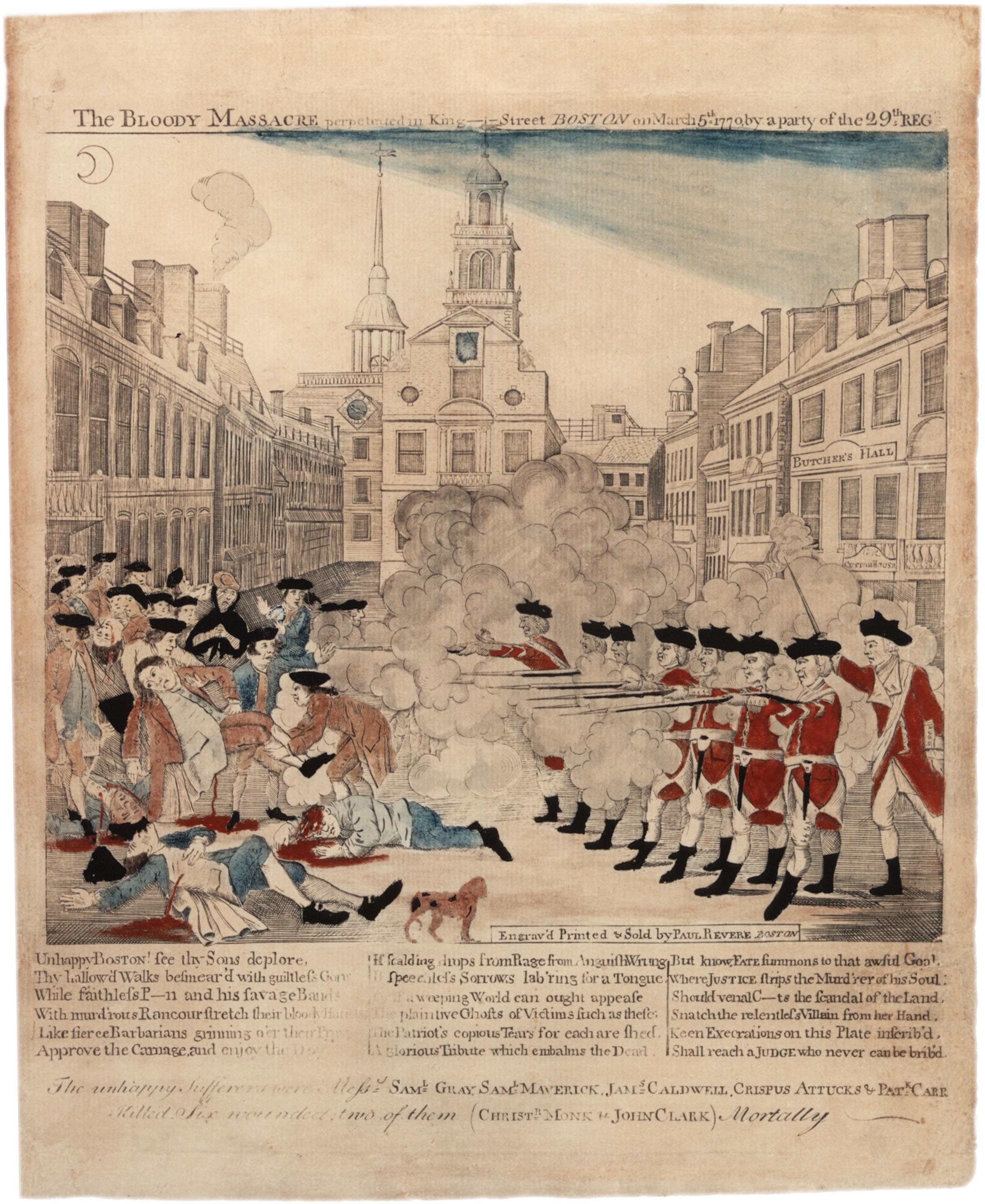
1. The Boston Massacre + Boston Massacre looking at multiple perspectives activity + A different viewpoint from Alonzo Chappel

2. Boston Massacre Resources:
-Paul Revere's Engraving Explained
-The Boston Massacre Trials - An Account, 2001 by Doug Linder, Professor at UMKC School of Law as an alternative perspective
-Massachusetts Historical Society's perspective
-Two Bullets recovered
-An 1856 perspective by a painter
-Notes by John Adams - Primary Source

3. Thomas Paine's Common Sense
-Archives and brief statement
-Thomas Paine's Common Sense broken down into 4 parts
-The New Yorker and Thomas Paine's Controversy

4. Olive Branch Petition and 3 questions to consider
-The actual Olive Branch Petition
-Quick scene from John Adams HBO mini-series on the Olive Branch - John Dickinson versus John Adams

5. Major American Petitions for Independence (pages 105-112 in your textbook)

Homework: 
1. You will be divided into 3 groups that will read, examine, and create two-column notes on a specific section of the Declaration of Independence. In class you were to already have your group and specific section of this almighty document.

2. DUE Thursday: Please complete the Major American Petitions for Independence (pages 105-112 in your textbook) packet for Thursday's class.  You must work independently on this packet in class and what you do not finish you should finish for homework.  This packet will cover the Olive Branch Petition, Common Sense, and The American Declaration of Independence.
___________________________________________________

U.S. HISTORY II - Period 1:

Essential Questions:
-Was American expansion overseas justified?
-Did the press cause the Spanish-American War?
-Was the acquisition of the Panama Canal Zone and act of justifiable imperialism?
-Does the need for self-defense give the US the right to interfere in the affairs of Latin America? (Think about the Roosevelt Corollary, "Dollar Diplomacy," and "Watchful Waiting")

Themes: Historical thinking methods, evaluating sources, Thinking like an historian, PEGS (Political, Economic, Geographic, Social), The Beginning of the Progressive Era

1. You all will finish your Test on American Imperialism at the beginning of the 20th Century, specifically the DBQ section.

2. The Assassination of Archduke Franz Ferdinand. Why is this "the spark" of the war? We will investigate and discuss the major causes of WWI.

3. World War I Maps and early Battles

4. Trench Warfare
WWI Life in the Trenches
PBS.org Trench Warfare and video footage


Homework:
1. Please read Chapter 19 - Section 1 - World War I begins - pages 582-586. Please OUTLINE the following in a 2-column chart.

What is Trench Warfare? Describe the trenches and the multiple layers of which an offensive opponent would have maneuvers in order to penetrate their defensive trench position?

Why American Neutrality at first?

How does the World War I eventually hit home?

Give the major reasons why America declares war?

_____________________________________________________

International Studies - Period 7
Essential Questions:
1. 
Does the world need the United Nations? Why or why not?
2. Should we enforce the Universal Declaration of Human Rights in countries not our own? If so, how? If not, why?
3. Is the world safer today with the United Nations than it was in 1945?
4. Is the United Nations an effective peace-keeping organization?
5. What should be done to improve the effectiveness of the United Nations?

Rwanda Genocide Essential Questions:
1. How did the character of Paul Ruseabagina, as the hotel manager in "Hotel Rwanda" display courage?
2. How does a society recover from a genocide?
3. Does Rwanda have a future?

Themes: Humanitarianism, World Peace, War vs. Peace, Sustainable Change, Non-Government Organizations

1. Presentations begin today for all of you to complete your Student Rwandan Genocide Project. Everything that is owed should be submitted in your Google Folder titled "Rwandan Genocide"

2. A primary Source from Rwanda's Genocide:


3. An impressive viewing of MANY UN Peacekeeping videos - Nearly 5 hours worth of short clips from many Peacekeeping Operations.


4. Human Rights - What are Human Rights?


5. United Nation Resources:
United Nations History
United Nations Multimedia Room
United Nations School bus Virtual Field Trip
United Nations Research Guide A-Z on EVERYTHING you can imagine!
United Nations Peacekeeping Missions
University of California organized a UN resources guide - Honestly, the BEST and more ORGANIZED I have seen yet on how to research issues concerning the United Nations.

Homework:
1.  None.

Monday, October 19, 2015

Day 32 - Monday

U.S. History I - Periods 2, 5, and 6: 
Essential Question:
-How did the French and Indian War help inspired a sense of unity and shared identity among the colonist?
-Were the colonist justified in resisting British policies after the French-Indian War? 
-Was the American War for Independence inevitable?
-Would you have been a revolutionary in 1776? 

Themes: Settlements on the East Coast and Southwest, Colonial life and struggles, Mercantilism, Colony-building, economic relationships

1. Period 6 needs to finish their Quiz. All other classes have finished and will be graded this week.

Homework: 
1. Please complete the rest of the Boston Massacre looking at multiple perspectives activity packet for homework.

2. DUE WEDNESDAY - Please complete the Major American Petitions for Independence (pages 105-112 in your textbook) packet for tomorrow's class.  You must work independently on this packet in class and what you do not finish you should finish for homework.  This packet will cover the Olive Branch Petition, Common Sense, and The American Declaration of Independence.
___________________________________________________

U.S. HISTORY II - Period 1:

Essential Questions:
-Was American expansion overseas justified?
-Did the press cause the Spanish-American War?
-Was the acquisition of the Panama Canal Zone and act of justifiable imperialism?
-Does the need for self-defense give the US the right to interfere in the affairs of Latin America? (Think about the Roosevelt Corollary, "Dollar Diplomacy," and "Watchful Waiting")

Themes: Historical thinking methods, evaluating sources, Thinking like an historian, PEGS (Political, Economic, Geographic, Social), The Beginning of the Progressive Era

1. Test on American Imperialism at the beginning of the 20th Century.

2. Spanish-American War Resources/Open Door Policy:
Causes of the War
Library of Congress - General information on the Spanish-American War
Spanish-American War Slideshow
PBS Special on All Events surrounding America's Quest for Imperialism
A Price for Freedom in the Spanish-American War
Headlines from the Spanish-American War
Cartoons from the Spanish-American War
Political Cartoon from the Spanish-American War
Spanish-American War DBQ'S (Document-Based Questions)
A Price for Freedom in the Spanish-American War
Headlines from the Spanish-American War
Cartoons from the Spanish-American War
Political Cartoon from the Spanish-American War
Defeating Spain in the Philippines
Cartoons on Filipinos from the Spanish American War
Article on Open Door Policy in relationship to the Spanish-American War

3. The Panama Canal Resources:
Video on the construction of the Panama Canal
-The Panama Canal in your textbook on pages 566 through 567. Then read "A Man, A Plan, A Canal, Panama" and then finally read "How did the US Obtain the Panama Canal" and then be able to answer the following 2 questions:
A. Explain the advantages to the United States of having a canal that connected both the Atlantic and Pacific Oceans under US control and the reasons the US was in a far better position to than any other country to build it?

Homework:
1. Please read Chapter 19 - Section 1 - World War I begins - pages 578-581. Please OUTLINE the following in a 2-column chart.

Major Causes and how?
Archduke Franz Ferdinand's role?
Where and how does the fighting start?

2. When you are done outlining, please watch The Assassination of Archduke Franz Ferdinand. Why is this "the spark" of the war?
_____________________________________________________

International Studies - Period 7
Essential Questions:
1. 
Does the world need the United Nations? Why or why not?
2. Should we enforce the Universal Declaration of Human Rights in countries not our own? If so, how? If not, why?
3. Is the world safer today with the United Nations than it was in 1945?
4. Is the United Nations an effective peace-keeping organization?
5. What should be done to improve the effectiveness of the United Nations?

Rwanda Genocide Essential Questions:
1. How did the character of Paul Ruseabagina, as the hotel manager in "Hotel Rwanda" display courage?
2. How does a society recover from a genocide?
3. Does Rwanda have a future?

Themes: Humanitarianism, World Peace, War vs. Peace, Sustainable Change, Non-Government Organizations

1. You now have 1 day left to complete your Student Rwandan Genocide Project, which is due TOMORROW on Tuesday, October 20th.  Everything that is owed should be submitted in your Google Folder titled "Rwandan Genocide" - but YOU MUST create your own folder with your name and Rwandan Genocide next to it.  This is also on Google Classroom as well.

2. A primary Source from Rwanda's Genocide:


3. An impressive viewing of MANY UN Peacekeeping videos - Nearly 5 hours worth of short clips from many Peacekeeping Operations.


4. Human Rights - What are Human Rights?


5. United Nation Resources:
United Nations History
United Nations Multimedia Room
United Nations School bus Virtual Field Trip
United Nations Research Guide A-Z on EVERYTHING you can imagine!
United Nations Peacekeeping Missions
University of California organized a UN resources guide - Honestly, the BEST and more ORGANIZED I have seen yet on how to research issues concerning the United Nations.

Homework:
1. Please use the shared Google Folder titled "Rwandan Genocide" to access the checklist/project and use it to make your own student files so that we can all access your work. This is on GOOGLE CLASSROOM AS WELL!!!
-Student Rwandan Genocide Project - Please complete by Tuesday on WHAT YOU WANT TO do as an authentic learning experience. Due Date is next Tuesday, October 20th - You now have 1 day left to complete this!

Thursday, October 15, 2015

Day 31 - Thursday

U.S. History I - Periods 2, 5, and 6: 
Essential Question:
-How did the French and Indian War help inspired a sense of unity and shared identity among the colonist?
-Were the colonist justified in resisting British policies after the French-Indian War? 
-Was the American War for Independence inevitable?
-Would you have been a revolutionary in 1776? 

Themes: Settlements on the East Coast and Southwest, Colonial life and struggles, Mercantilism, Colony-building, economic relationships

1. Warm-up before the quiz.

2. Quiz on the Causes of the American Revolution.

Homework: 
1. None and enjoy your weekend!
___________________________________________________

U.S. HISTORY II - Period 1:

Essential Questions:
-Was American expansion overseas justified?
-Did the press cause the Spanish-American War?
-Was the acquisition of the Panama Canal Zone and act of justifiable imperialism?
-Does the need for self-defense give the US the right to interfere in the affairs of Latin America? (Think about the Roosevelt Corollary, "Dollar Diplomacy," and "Watchful Waiting")

Themes: Historical thinking methods, evaluating sources, Thinking like an historian, PEGS (Political, Economic, Geographic, Social), The Beginning of the Progressive Era

1. All students will have 5-7 minutes to get into their groups and plan for the debate WHICH will count as a Quiz Grade, so you are expected to take on an active grade:

-Sources: Textbook pages 566 through 567, online textbook reading "A Man, A Plan, A Canal, Panama", and then finally a reading "How did the US Obtain the Panama Canal"

***"Did the US steal the Panama Canal from Columbia or merely behaved rationally in its own best interest?"

A. Students below will be Colombians (Colombian's perspective at least) - Abeshaus, Arsenault, Bathol, Bonanno, Brinklow, Conte, Costa, Dalla Santa, Davison, Frieden, Gnerre, Gomez Sanchez, and Hyman

B. Students below will be American Patriots (American perspective at least) - Kasozi, Khalifa, Lombardo, O'Toole, Patel, Pavao, Ridley, Rivera, Robinson, Russo, Smith, Strange, and Surabian. 

3. What were the Foreign Policy missions of President Theodore Roosevelt, William H. Taft, and Woodrow Wilson called and give ONE prime example of each policy. (Hint: You may use pages 568-571 in your textbook

4. Spanish-American War Resources/Open Door Policy:
Causes of the War
Library of Congress - General information on the Spanish-American War
Spanish-American War Slideshow
PBS Special on All Events surrounding America's Quest for Imperialism
A Price for Freedom in the Spanish-American War
Headlines from the Spanish-American War
Cartoons from the Spanish-American War
Political Cartoon from the Spanish-American War
Spanish-American War DBQ'S (Document-Based Questions)
A Price for Freedom in the Spanish-American War
Headlines from the Spanish-American War
Cartoons from the Spanish-American War
Political Cartoon from the Spanish-American War
Defeating Spain in the Philippines
Cartoons on Filipinos from the Spanish American War
Article on Open Door Policy in relationship to the Spanish-American War

5. The Panama Canal Resources:
Video on the construction of the Panama Canal
-The Panama Canal in your textbook on pages 566 through 567. Then read "A Man, A Plan, A Canal, Panama" and then finally read "How did the US Obtain the Panama Canal" and then be able to answer the following 2 questions:
A. Explain the advantages to the United States of having a canal that connected both the Atlantic and Pacific Oceans under US control and the reasons the US was in a far better position to than any other country to build it?

Homework:
1. Be prepared to study, organize your notes and understand you will have a TEST on Monday on all of Chapter 18 - American Imperialism from 1867-1906.
Key Concepts/People are:
American Imperialism - Why, When, How, Where?
White Man's Burden
Alfred Mahan's plan
Causes of the Spanish-American War
General Valeriano Weyler
Yellow Journalism
The De Lome Letter
USS Maine
George Dewey in the Phillipines
Rough Riders
Terms from the Treaty of Paris
Teller Amendment/Platt Amendments
Impact of war on Puerto Rico (Protectorate), Cuba, Phillipines - what did it cost (lives, price, civilized theory of Kiplings "White Man's Burden" the US?
The Panama Canal
John Hay - Secretary of War
"Open Door Policy"
Boxer Rebellion
The Foreign Policy of the USA Presidents from 1900-1914
Why intervention in Mexico?

_____________________________________________________

International Studies - Period 7
Essential Questions:
1. 
Does the world need the United Nations? Why or why not?
2. Should we enforce the Universal Declaration of Human Rights in countries not our own? If so, how? If not, why?
3. Is the world safer today with the United Nations than it was in 1945?
4. Is the United Nations an effective peace-keeping organization?
5. What should be done to improve the effectiveness of the United Nations?

Rwanda Genocide Essential Questions:
1. How did the character of Paul Ruseabagina, as the hotel manager in "Hotel Rwanda" display courage?
2. How does a society recover from a genocide?
3. Does Rwanda have a future?

Themes: Humanitarianism, World Peace, War vs. Peace, Sustainable Change, Non-Government Organizations

1. You now have 5 days left to complete your Student Rwandan Genocide Project, which is due on Tuesday, October 20th.  Everything that is owed should be submitted in your Google Folder titled "Rwandan Genocide" - but YOU MUST create your own folder with your name and Rwandan Genocide next to it.  This is also on Google Classroom as well.

2. A primary Source from Rwanda's Genocide:


3. An impressive viewing of MANY UN Peacekeeping videos - Nearly 5 hours worth of short clips from many Peacekeeping Operations.


4. Human Rights - What are Human Rights?


5. United Nation Resources:
United Nations History
United Nations Multimedia Room
United Nations School bus Virtual Field Trip
United Nations Research Guide A-Z on EVERYTHING you can imagine!
United Nations Peacekeeping Missions
University of California organized a UN resources guide - Honestly, the BEST and more ORGANIZED I have seen yet on how to research issues concerning the United Nations.

Homework:
1. Please use the shared Google Folder titled "Rwandan Genocide" to access the checklist/project and use it to make your own student files so that we can all access your work. This is on GOOGLE CLASSROOM AS WELL!!!
-Student Rwandan Genocide Project - MAKE a decision by Tuesday on WHAT YOU WANT TO do as an authentic learning experience. Due Date is next Tuesday, October 20th - You now have 5 days to complete this!

Wednesday, October 14, 2015

Day 30 - Wednesday

U.S. History I - Periods 2, 5, and 6: 
Essential Question:
-What can we infer about the values and beliefs of settlers?
-How did the French and Indian War help inspired a sense of unity and shared identity among the colonist?
-Did Great Britain lose more than it gained from its victory in the French-Indian War?
-Were the colonist justified in resisting British policies after the French-Indian War? 

Themes: Settlements on the East Coast and Southwest, Colonial life and struggles, Mercantilism, Colony-building, economic relationships

1. Freshmen will be on the FIELD TRIP TO BOSTON and so will I since most of my classes are freshmen.  For those of you who are not with us - Anna & Anders - please make sure you both study for your quiz on Chapter 4 - Sections 1 & 2 for Friday.  This means you have completed the Causes of the American Revolution Packet, review the end of the French and Indian War Slideshow, Road to Revolution Slideshow (this is a NEW one!) and (Chapter 4 - Sections 1 & 2). You can use this as a study packet for the quiz on Friday.

2. We will watch this Crash Course Video on Thursday!


3. The Boston Massacre + Boston Massacre looking at multiple perspectives activity


Homework: 
1. You will have a quiz on Chapter 4 - Sections 1 & 2 on Friday.  So make sure you complete the Causes of the American Revolution Packet  (Chapter 4 - Sections 1 & 2). You can use this as a study packet for the quiz on Friday. Oh and many of you have not submitted the CLASS WORK FROM MONDAY (when I was out) = it will be 50% off for credit.
___________________________________________________

U.S. HISTORY II - Period 1:

Essential Questions:
-Was American expansion overseas justified?
-Did the press cause the Spanish-American War?
-Was the acquisition of the Panama Canal Zone and act of justifiable imperialism?
-Does the need for self-defense give the US the right to interfere in the affairs of Latin America? (Think about the Roosevelt Corollary, "Dollar Diplomacy," and "Watchful Waiting")

Themes: Historical thinking methods, evaluating sources, Thinking like an historian, PEGS (Political, Economic, Geographic, Social), The Beginning of the Progressive Era

1. Many of you have not submitted the CLASS WORK FROM MONDAY (when I was out) = it will be 50% off for credit.

2. Be prepared to debate the issue, "Did the US steal the Panama Canal from Columbia or merely behaved rationally in its own best interest?"
A. Students below will be Colombians (Colombian's perspective at least) - Abeshaus, Arsenault, Bathol, Bonanno, Brinklow, Conte, Costa, Dalla Santa, Davison, Frieden, Gnerre, Gomez Sanchez, and Hyman

B. Students below will be American Patriots (American perspective at least) - Kasozi, Khalifa, Lombardo, O'Toole, Patel, Pavao, Ridley, Rivera, Robinson, Russo, Smith, Strange, and Surabian. 

3. What were the Foreign Policy missions of President Theodore Roosevelt, William H. Taft, and Woodrow Wilson called and give ONE prime example of each policy. (Hint: You may use pages 568-571 in your textbook

4. Spanish-American War Resources/Open Door Policy:
Causes of the War
Library of Congress - General information on the Spanish-American War
Spanish-American War Slideshow
PBS Special on All Events surrounding America's Quest for Imperialism
A Price for Freedom in the Spanish-American War
Headlines from the Spanish-American War
Cartoons from the Spanish-American War
Political Cartoon from the Spanish-American War
Spanish-American War DBQ'S (Document-Based Questions)
A Price for Freedom in the Spanish-American War
Headlines from the Spanish-American War
Cartoons from the Spanish-American War
Political Cartoon from the Spanish-American War
Defeating Spain in the Philippines
Cartoons on Filipinos from the Spanish American War
Article on Open Door Policy in relationship to the Spanish-American War

5. The Panama Canal Resources:
Video on the construction of the Panama Canal
-The Panama Canal in your textbook on pages 566 through 567. Then read "A Man, A Plan, A Canal, Panama" and then finally read "How did the US Obtain the Panama Canal" and then be able to answer the following 2 questions:
A. Explain the advantages to the United States of having a canal that connected both the Atlantic and Pacific Oceans under US control and the reasons the US was in a far better position to than any other country to build it?

Homework:
1.  Be prepared to debate the issue, "Did the US steal the Panama Canal from Columbia or merely behaved rationally in its own best interest?" Look at Google Classroom to see what is due for this - you (each group - Colombians & American Patriots - need to have one group document shared with each other and myself as editors)
A. Students below will be Colombians (Colombian's perspective at least) - Abeshaus, Arsenault, Bathol, Bonanno, Brinklow, Conte, Costa, Dalla Santa, Davison, Frieden, Gnerre, Gomez Sanchez, and Hyman

B. Students below will be American Patriots (American perspective at least) - Kasozi, Khalifa, Lombardo, O'Toole, Patel, Pavao, Ridley, Rivera, Robinson, Russo, Smith, Strange, and Surabian. 

2. What were the Foreign Policy missions of President Theodore Roosevelt, William H. Taft, and Woodrow Wilson called and give ONE prime example of each policy. (Hint: You may use pages 568-571 in your textbook
_____________________________________________________

International Studies - Period 7
Essential Questions:
1. 
Does the world need the United Nations? Why or why not?
2. Should we enforce the Universal Declaration of Human Rights in countries not our own? If so, how? If not, why?
3. Is the world safer today with the United Nations than it was in 1945?
4. Is the United Nations an effective peace-keeping organization?
5. What should be done to improve the effectiveness of the United Nations?

Rwanda Genocide Essential Questions:
1. How did the character of Paul Ruseabagina, as the hotel manager in "Hotel Rwanda" display courage?
2. How does a society recover from a genocide?
3. Does Rwanda have a future?

Themes: Humanitarianism, World Peace, War vs. Peace, Sustainable Change, Non-Government Organizations

1. You now have 6 days left to complete your Student Rwandan Genocide Project, which is due on Monday, October 19th.  Everything that is owed should be submitted in your Google Folder titled "Rwandan Genocide" - but YOU MUST create your own folder with your name and Rwandan Genocide next to it.  This is also on Google Classroom as well.


2. A primary Source from Rwanda's Genocide:


3. An impressive viewing of MANY UN Peacekeeping videos - Nearly 5 hours worth of short clips from many Peacekeeping Operations.


4. Human Rights - What are Human Rights?


5. United Nation Resources:
United Nations History
United Nations Multimedia Room
United Nations School bus Virtual Field Trip
United Nations Research Guide A-Z on EVERYTHING you can imagine!
United Nations Peacekeeping Missions
University of California organized a UN resources guide - Honestly, the BEST and more ORGANIZED I have seen yet on how to research issues concerning the United Nations.

Homework:
1. Please use the shared Google Folder titled "Rwandan Genocide" to access the checklist/project and use it to make your own student files so that we can all access your work. This is on GOOGLE CLASSROOM AS WELL!!!
-Student Rwandan Genocide Project - MAKE a decision by Tuesday on WHAT YOU WANT TO do as an authentic learning experience. Due Date is next Monday, October 19th - You now have 6 days to complete this!

Tuesday, October 13, 2015

Day 29 - Tuesday

U.S. History I - Periods 2, 5, and 6: 
Essential Question:
-What can we infer about the values and beliefs of settlers?
-How did the French and Indian War help inspired a sense of unity and shared identity among the colonist?
-Did Great Britain lose more than it gained from its victory in the French-Indian War?
-Were the colonist justified in resisting British policies after the French-Indian War? 

Themes: Settlements on the East Coast and Southwest, Colonial life and struggles, Mercantilism, Colony-building, economic relationships

1. Please COMPLETE your Jigsaw groups from Friday and finish the rest of this study guide on Chapter 4 section 1 The Stirrings of Rebellion - pages 96-99 (stop at Battles of Lexington and Concord) and Section 2 Ideas Help Start a Revolution using the Causes of the American Revolution Packet  (IF you are confused on any aspect of these directions, then just COMPLETE THE PACKET by yourself.)

-Please get in the same 5 groups for a Jigsaw Activity from Friday.
-The Jigsaw activity worked on three aspects: Round 1 will be EXPERTS - Learn about your assigned group using the homework handout and at least ONE credible internet source, and ONE visual.  Round 2 included 2 Captains from your group to get up to teach the other groups as "traveling teachers" and the rest of you will stay seated as other groups rotate and come to your group to educate you on their assigned act. The "traveling teachers" will be teaching each group for 3-5 minutes. Round 3 is when your Captains from your group come back, and then the rest of the group must teach them about the other acts you all learned about.

3. We will watch this Crash Course Video on Thursday!


4. The Boston Massacre + Boston Massacre looking at multiple perspectives activity


Homework: 
1. None, we have a field trip tomorrow, BUT you will have a quiz on Chapter 4 - Sections 1 & 2 on Friday.  So make sure you complete the Causes of the American Revolution Packet  (Chapter 4 - Sections 1 & 2). You can use this as a study packet for the quiz on Friday.
___________________________________________________

U.S. HISTORY II - Period 1:

Essential Questions:
-Was American expansion overseas justified?
-Did the press cause the Spanish-American War?
-Was the acquisition of the Panama Canal Zone and act of justifiable imperialism?
-Does the need for self-defense give the US the right to interfere in the affairs of Latin America? (Think about the Roosevelt Corollary, "Dollar Diplomacy," and "Watchful Waiting")

Themes: Historical thinking methods, evaluating sources, Thinking like an historian, PEGS (Political, Economic, Geographic, Social), The Beginning of the Progressive Era

1. Based off the Group Activity from FRIDAY, Round 1 has been completed, so now you need to finish Rounds 2 and 3:
Round 2:  Round 2 - Group Presentation to classmates for a Jigsaw share - please have 2 representatives from your group go around to the other groups to be the "Traveling Teachers" and teach about their aspect of the Top-Down Web on the newly acquired lands America received as part of Spanish-American War.
Everyone should complete their Jigsaw Activity on Newly Acquired Lands, which will represent Cuba, Philippines, Puerto Rico and China's Open Door Policy.

Round 3 - Go back to your groups and discuss what you all learned about the Newly Acquired Lands from the Spanish-American War and please make sure your Top-Down Webs are fully completed. Submit to Google Classroom when you are done.

Group 1 - Cuba - Document #1, Document #5 and Political Cartoon #1 (from the DBQ link)
Group 2 - Puerto Rico - Document #6, Cartoon # 2, Cartoon #5 (from the DBQ link)
Group 3 - Philippines - Defeating Spain in the Philippines (scroll down to the bottom of the page) and Cartoons on Filipinos from the Spanish American War
Group 4 - Open Door Policy - Cartoon # 6 (from the DBQ link) + Article on Open Door Policy in relationship to the Spanish-American War

3. Spanish-American War Resources/Open Door Policy:
Causes of the War
Library of Congress - General information on the Spanish-American War
Spanish-American War Slideshow
PBS Special on All Events surrounding America's Quest for Imperialism
A Price for Freedom in the Spanish-American War
Headlines from the Spanish-American War
Cartoons from the Spanish-American War
Political Cartoon from the Spanish-American War
Spanish-American War DBQ'S (Document-Based Questions)
A Price for Freedom in the Spanish-American War
Headlines from the Spanish-American War
Cartoons from the Spanish-American War
Political Cartoon from the Spanish-American War

4. The Panama Canal Resources:
Video on the construction of the Panama Canal
-The Panama Canal in your textbook on pages 566 through 567. Then read "A Man, A Plan, A Canal, Panama" and then finally read "How did the US Obtain the Panama Canal" and then be able to answer the following 2 questions:
A. Explain the advantages to the United States of having a canal that connected both the Atlantic and Pacific Oceans under US control and the reasons the US was in a far better position to than any other country to build it?

Homework:
1.  Be prepared to debate the issue, "Did the US steal the Panama Canal from Columbia or merely behaved rationally in its own best interest?"
A. Students below will be Colombians (Colombian's perspective at least) - Abeshaus, Arsenault, Bathol, Bonanno, Brinklow, Conte, Costa, Dalla Santa, Davison, Frieden, Gnerre, Gomez Sanchez, and Hyman

B. Students below will be American Patriots (American perspective at least) - Kasozi, Khalifa, Lombardo, O'Toole, Patel, Pavao, Ridley, Rivera, Robinson, Russo, Smith, Strange, and Surabian. 

2. What were the Foreign Policy missions of President Theodore Roosevelt, William H. Taft, and Woodrow Wilson called and give ONE prime example of each policy. (Hint: You may use pages 568-571 in your textbook
_____________________________________________________

International Studies - Period 7
Essential Questions:
1. 
Does the world need the United Nations? Why or why not?
2. Should we enforce the Universal Declaration of Human Rights in countries not our own? If so, how? If not, why?
3. Is the world safer today with the United Nations than it was in 1945?
4. Is the United Nations an effective peace-keeping organization?
5. What should be done to improve the effectiveness of the United Nations?

Rwanda Genocide Essential Questions:
1. How did the character of Paul Ruseabagina, as the hotel manager in "Hotel Rwanda" display courage?
2. How does a society recover from a genocide?
3. Does Rwanda have a future?

Themes: Humanitarianism, World Peace, War vs. Peace, Sustainable Change, Non-Government Organizations

1. Please finish watching Hotel Rwanda below. Please relate it to our Genocide discussion yesterday and Peacekeeping responsibilities from our study of the United Nations. Please begin working on your Student Rwandan Genocide Project


2. A primary Source from Rwanda's Genocide:


3. An impressive viewing of MANY UN Peacekeeping videos - Nearly 5 hours worth of short clips from many Peacekeeping Operations.


4. Human Rights - What are Human Rights?


5. United Nation Resources:
United Nations History
United Nations Multimedia Room
United Nations School bus Virtual Field Trip
United Nations Research Guide A-Z on EVERYTHING you can imagine!
United Nations Peacekeeping Missions
University of California organized a UN resources guide - Honestly, the BEST and more ORGANIZED I have seen yet on how to research issues concerning the United Nations.

Homework:
1. After watching Hotel Rwanda please use your critical thinking skills to relate this Hollywood material to our Genocide discussion and UN peacekeeping responsibilities from our study of the United Nations and prepare for the Rwandan Genocide Project. Please use the shared Google Folder to access the checklist/project and use it to make your own student files so that we can all access your work.
-Student Rwandan Genocide Project - MAKE a decision by Tuesday on WHAT YOU WANT TO do as an authentic learning experience. Due Date is next Monday, October 19th - You have 7 days to complete this!