Search This Blog

Tuesday, December 13, 2016

Day 64 - Tuesday

U.S. History I - Periods 1, 2 & 7: 
Essential Questions:
-What does it mean to have a representative government and live in a democratic society?
-What does it mean to be an "American"?
-What are the rights, liberties, and responsibilities of U.S. citizens?
-Is the U.S. Constitution a living document? If so, how is it a living document?
-Does our state government or federal government have a greater impact in our lives?
-Do separation of powers and checks and balances make our government work too slowly?

Themes: Balance of Powers, Federalism, Articles, Branches of Government, US Constitution as a Living Document, Bill of Rights

1.  Today we will be watching Constitution USA - Forming a More Perfect Union, a PBS film - check Google Classroom for the Outline Response Sheet.

2. The US Constitution Resources:
-Outline Notes - Review and let me know if you have any question.
-Easy-to-Follow US Constitution Guide
-The United State Government - Download this slideshow
-National Archives "America's Founding Fathers"
-USConstitution.net
-National Constitution Center
-The Constitutional Convention - The Ratification Process
-The U.S. Constitution: An Enduring Document - U.S. State Department
-The US Government and what the Constitution says... - Slideshow #1
-The National Government Organization and Constitution - Slideshow #2
-The Electoral College Explained - 3-2-1 Activity (see Google Classroom)
-2000 Presidential Election: Fair or 'Stolen'? (write a paragraph arguing a thesis to support "Fair or Stolen"?)

3. Bill of Rights - TED-ED Video

Homework:
1. Yes, check Google Classroom.
___________________________________________________


U.S. HISTORY II - Period 3:
Essential Questions:
-Was the decade of the 1920's a time of innovation or conservatism?
-Why did a national culture develop in the 1920's?
-How did trends in fashion and music reflect the spirit of the 1920's?
-Why did Prohibition lead to more crime?
-How did a war fought to "save the world for democracy" end up threatening civil rights in America?
-Should the USA limit immigration?

Themes: Getting back to Normalcy, Pop Culture, The Jazz Age, The Red Scare, Limitations on Immigrants, Consumerism

1. What questions, reflections, or ideas did you have regarding the slideshow "The Roaring Twenties".  Your Roaring 1920's Multimedia Project will be presented today - See Google Classroom and the shared Google Folder.

2. Think-Pair-Share your 2-column notes and PIE summary on Identity. What was it about the two-column notes that was difficult to follow using a slideshow?  Was it easier or more difficult than a textbook?  What content is absolutely necessary to LEARN? Did the summary just review what you learned, or did you actually make clear connections, critical thoughts, and a claim that was provable?

3. We will begin watching The History Channel's The Decades: 1920-1929; Rumrunners, Moonshiners and Bootleggers - with a focus on "Mob City: Detroit"

4. The Roaring 1920's Resources
"The Roaring Twenties" - Slideshow
The 1920's Unit Review - Slideshare and very powerful images and information
Five Jazz Sides for the Age of Prohibition - NPR article
How Bessie Smith Ushered in the Jazz Age - NPR article
Population Chart of the USA - Patterns from 1900 - 1920
"The Roaring Twenties Overview Essay" by Professor Joshua Zeitz of Harvard University
The Roaring Twenties - Movie (1939)
   -Movie Review

5. In small groups, on Thursday, we will explore the The Jazz Age - PBS and Ken Burns - Go off an explore The Jazz Age - what do you notice about the style of different Jazz Musicians? Who are these musicians? Where do they originate from? What is Jazz Music? What instruments are being used? What do you all like or dislike about this age of music? Does this music help or hurt the African-American communities? How and why?
-More Jazz Music Links

6. The United States in the 1920's Unit Resources:

Homework:
1. Yes, check Google Classroom.
_____________________________________________________

International Studies - Period 4
Essential Questions:
1. How do we think about POWER in the 21st Century?
2. How do we define our interest as a country?
3. What does "hard power" and "soft power" capability and how does it impact foreign policy?
4. How is power distributed?

Themes: War vs. Peace, Sustainable Change, Hard Power, Soft Power, Smart Power, North Korea, Kim Jong-Un, Nuclear Crisis in the 21st Century

1.  Students have decided to go with NORTH KOREA's Kim Jong-Un Regime. 

2. We need to come up with an DEBATE QUESTION that facilitates a discussion on which power tactic is needed in order to influence the outcome we (USA/WORLD) would want.  As a result, what is the OUTCOME WE WANT?

3. Today is your last day to prepare for your small groups use your power technique -  HARD, SOFT, and SMART POWER - to determine the outcomes and consequences of which diplomatic technique you will use in a Round-Table Discussion format.  Remember the key is to utilize your power diplomacy techniques to decide what is the best course of diplomacy in order to find a solution. You will conduct research today, over the weekend, Monday and Tuesday, but on Wednesday you will have a round-table debate.  We need to create an essential question as well based on the topic you choose by the end of Friday's class period.

3. Hard Power and Soft Power Readings and Resources:
Homework:
1. Yes, check Google Classroom. 

Monday, December 12, 2016

Day 63 - Monday

U.S. History I - Periods 1, 2 & 7: 
Essential Questions:
-What does it mean to have a representative government and live in a democratic society?
-What does it mean to be an "American"?
-What are the rights, liberties, and responsibilities of U.S. citizens?
-Is the U.S. Constitution a living document? If so, how is it a living document?
-Does our state government or federal government have a greater impact in our lives?
-Do separation of powers and checks and balances make our government work too slowly?

Themes: Balance of Powers, Federalism, Articles, Branches of Government, US Constitution as a Living Document, Bill of Rights

1.  Today we will be finishing The United State Government slideshow as all periods have been shortened.  On Tuesday, we will be watching Constitution USA - Forming a More Perfect Union, a PBS film - check Google Classroom for the Outline Response Sheet.

2. The US Constitution Resources:
-Outline Notes - Review and let me know if you have any question.
-Easy-to-Follow US Constitution Guide
-The United State Government - Download this slideshow
-National Archives "America's Founding Fathers"
-USConstitution.net
-National Constitution Center
-The Constitutional Convention - The Ratification Process
-The U.S. Constitution: An Enduring Document - U.S. State Department
-The US Government and what the Constitution says... - Slideshow #1
-The National Government Organization and Constitution - Slideshow #2
-The Electoral College Explained - 3-2-1 Activity (see Google Classroom)
-2000 Presidential Election: Fair or 'Stolen'? (write a paragraph arguing a thesis to support "Fair or Stolen"?)

3. Bill of Rights - TED-ED Video

Homework:
1. Yes, check Google Classroom.
___________________________________________________


U.S. HISTORY II - Period 3:
Essential Questions:
-How did World War I change America?
-Was the treaty of Versailles a fair and settlement for lasting world peace?
-Was the decade of the 1920's a time of innovation or conservationism?
-Why did a national culture develop in the 1920's?
-How did trends in fashion and music reflect the spirit of the 1920's?
-Why did Prohibition lead to more crime?

Themes: American Exceptionalism, Isolationism, Interventionism, Causes of World War I

1. Outline the highlights from "The Roaring Twenties Overview Essay" by Professor Joshua Zeitz of Harvard University.  We will conduct a Think-Pair-Share on your main ideas, people, concepts, fun facts, questions and a thesis statement by using the white board to build a class overview of the 1920's.

2. We will begin to take a look at The Roaring 1920's with a quick overview using the slideshow "The Roaring Twenties" and you must create a two-column note as I present this information please.

3. On Tuesday, we will begin watching The History Channel's The Decades: 1920-1929; Rumrunners, Moonshiners and Bootleggers - with a focus on "Mob City: Detroit"

4. The Roaring 1920's Resources
"The Roaring Twenties" - Slideshow
The 1920's Unit Review - Slideshare and very powerful images and information
Five Jazz Sides for the Age of Prohibition - NPR article
How Bessie Smith Ushered in the Jazz Age - NPR article
Population Chart of the USA - Patterns from 1900 - 1920
"The Roaring Twenties Overview Essay" by Professor Joshua Zeitz of Harvard University
The Roaring Twenties - Movie (1939)
   -Movie Review

5. In small groups, next week, we will explore the The Jazz Age - PBS and Ken Burns - Go off an explore The Jazz Age - what do you notice about the style of different Jazz Musicians? Who are these musicians? Where do they originate from? What is Jazz Music? What instruments are being used? What do you all like or dislike about this age of music? Does this music help or hurt the African-American communities? How and why?
-More Jazz Music Links

6. The United States in the 1920's Unit Resources:

Homework:
1. Yes, check Google Classroom.
_____________________________________________________

International Studies - Period 4
Essential Questions:
1. How do we think about POWER in the 21st Century?
2. How do we define our interest as a country?
3. What does "hard power" and "soft power" capability and how does it impact foreign policy?
4. How is power distributed?

Themes: War vs. Peace, Sustainable Change, Hard Power, Soft Power, Smart Power, North Korea, Kim Jong-Un, Nuclear Crisis in the 21st Century

1.  Students have decided to go with NORTH KOREA's Kim Jong-Un Regime. We need to come up with an DEBATE QUESTION that facilitates a discussion on which power tactic is needed in order to influence the outcome we (USA/WORLD) would want.  As a result, what is the OUTCOME WE WANT?

2. In individual groups, use your power technique -  HARD, SOFT, and SMART POWER - to determine the outcomes and consequences of which diplomatic technique you will use in a Round-Table Discussion format.  Remember the key is to utilize your power diplomacy techniques to decide what is the best course of diplomacy in order to find a solution. You will conduct research today, over the weekend, Monday and Tuesday, but on Wednesday you will have a round-table debate.  We need to create an essential question as well based on the topic you choose by the end of Friday's class period.

3. Hard Power and Soft Power Readings and Resources:
Homework:
1. Yes, check Google Classroom. 

Friday, December 9, 2016

Day 62 - Friday

U.S. History I - Periods 1, 2 & 7: 
Essential Questions:
-What does it mean to have a representative government and live in a democratic society?
-What does it mean to be an "American"?
-What are the rights, liberties, and responsibilities of U.S. citizens?
-Is the U.S. Constitution a living document? If so, how is it a living document?
-Does our state government or federal government have a greater impact in our lives?
-Do separation of powers and checks and balances make our government work too slowly?

Themes: Balance of Powers, Federalism, Separation of Powers, Articles, Branches of Government,

1.  The Constitution and Federalism. 


2. The US Constitution Resources:
-Outline Notes - Review and let me know if you have any question.
-Easy-to-Follow US Constitution Guide
-The United State Government - Download this slideshow
-National Archives "America's Founding Fathers"
-USConstitution.net
-National Constitution Center
-The Constitutional Convention - The Ratification Process
-The U.S. Constitution: An Enduring Document - U.S. State Department
-The US Government and what the Constitution says... - Slideshow #1
-The National Government Organization and Constitution - Slideshow #2
-The Electoral College Explained - 3-2-1 Activity (see Google Classroom)
-2000 Presidential Election: Fair or 'Stolen'? (write a paragraph arguing a thesis to support "Fair or Stolen"?)

3. Constitution USA - PBS Video - check Google Classroom for the response sheet.
Bill of Rights - TED-ED Video

Homework:
1. Yes, check Google Classroom.
___________________________________________________


U.S. HISTORY II - Period 3:
Essential Questions:
-How did World War I change America?
-Was the treaty of Versailles a fair and settlement for lasting world peace?
-Was the decade of the 1920's a time of innovation or conservationism?
-Why did a national culture develop in the 1920's?
-How did trends in fashion and music reflect the spirit of the 1920's?
-Why did Prohibition lead to more crime?

Themes: American Exceptionalism, Isolationism, Interventionism, Causes of World War I

1. Today will be the last day we review the Treaty of Versailles. The question: "Why didn't the Treaty of Versailles lay the foundation for a lasting peace in the world?" should be answered today.
Treaty of Versailles Slideshow - Please download and we will finish our examination today!

2. "The Roaring Twenties Overview Essay" by Professor Joshua Zeitz of Harvard University and we will conduct a Think-Pair-Share on your main ideas, people, concepts, fun facts, questions and a thesis statement. What were the major ideas to come out of the 1920's? Create ONE question you have about the 1920's after talking with your partner.

3. We will begin to take a look at The Roaring 1920's with a quick overview using the slideshow "The Roaring Twenties" and you must create a two-column note as I present this information please.

4. On Monday, we will begin watching The History Channel's The Decades: 1920-1929; Rumrunners, Moonshiners and Bootleggers - with a focus on "Mob City: Detroit"

5. The Roaring 1920's Resources
"The Roaring Twenties" - Slideshow
The 1920's Unit Review - Slideshare and very powerful images and information
Five Jazz Sides for the Age of Prohibition - NPR article
How Bessie Smith Ushered in the Jazz Age - NPR article
Population Chart of the USA - Patterns from 1900 - 1920
"The Roaring Twenties Overview Essay" by Professor Joshua Zeitz of Harvard University
The Roaring Twenties - Movie (1939)
   -Movie Review

6. In small groups, next week, we will explore the The Jazz Age - PBS and Ken Burns - Go off an explore The Jazz Age - what do you notice about the style of different Jazz Musicians? Who are these musicians? Where do they originate from? What is Jazz Music? What instruments are being used? What do you all like or dislike about this age of music? Does this music help or hurt the African-American communities? How and why?
-More Jazz Music Links

7. The United States in the 1920's Unit Resources:

Homework:
1. Yes, check Google Classroom.
_____________________________________________________

International Studies - Period 4
Essential Questions:
1. How do we think about POWER in the 21st Century?
2. How do we define our interest as a country?
3. What does "hard power" and "soft power" capability and how does it impact foreign policy?
4. How is power distributed?

Themes: War vs. Peace, Sustainable Change, Hard Power, Soft Power, Smart Power

1.  Students will decide on what ONE GLOBAL TOPIC/EVENT from 2016 they would like to debate in a Round-Table Discussion format using HARD, SOFT, and SMART POWER techniques to decide what is the best course of diplomacy in order to find a solution. You will conduct research today, over the weekend, Monday and Tuesday, but on Wednesday you will have a round-table debate.  We need to create an essential question as well based on the topic you choose by the end of Friday's class period.

2. Hard Power and Soft Power Readings and Resources:
Homework:
1. Yes, check Google Classroom. 

Thursday, December 8, 2016

Day 61 - Thursday

U.S. History I - Periods 1, 2 & 7: 
Essential Questions:
-What does it mean to have a representative government and live in a democratic society?
-What does it mean to be an "American"?
-What are the rights, liberties, and responsibilities of U.S. citizens?
-Is the U.S. Constitution a living document? If so, how is it a living document?
-Does our state government or federal government have a greater impact in our lives?
-Do separation of powers and checks and balances make our government work too slowly?

Themes: Balance of Powers, Federalism, Separation of Powers, Articles, Branches of Government,

1.  The Constitution and Federalism. 


2. The US Constitution Resources:
-Outline Notes - Review and let me know if you have any question.
-Easy-to-Follow US Constitution Guide
-The United State Government - Download this slideshow
-National Archives "America's Founding Fathers"
-USConstitution.net
-National Constitution Center
-The Constitutional Convention - The Ratification Process
-The U.S. Constitution: An Enduring Document - U.S. State Department
-The US Government and what the Constitution says... - Slideshow #1
-The National Government Organization and Constitution - Slideshow #2
-The Electoral College Explained - 3-2-1 Activity (see Google Classroom)
-2000 Presidential Election: Fair or 'Stolen'? (write a paragraph arguing a thesis to support "Fair or Stolen"?)

3. Constitution USA - PBS Video - check Google Classroom for the response sheet.
Bill of Rights - TED-ED Video

Homework:
1. Yes, check Google Classroom.
___________________________________________________


U.S. HISTORY II - Period 3:
Essential Questions:
-How did World War I change America?
-Was the decade of the 1920's a time of innovation or conservationism?
-Should the USA limit immigration?
-Was the treaty of Versailles a fair and settlement for lasting world peace?

Themes: American Exceptionalism, Isolationism, Interventionism, Causes of World War I

1. Please review the resources below and answer the question: "Why didn't the Treaty of Versailles lay the foundation for a lasting peace in the world?"
Treaty of Versailles Political Cartoon Activity - Please Complete this in Class.
Treaty of Versailles Slideshow - Please download and review!
Woodrow Wilson Presidential Video - Please watch in class

2.. We will begin to take a look at The Roaring 1920's with a quick overview using the slideshow "The Roaring Twenties" and you must create a two-column note as I present this information please. Additionally, I will introduce you to an interesting article titled "The Roaring Twenties" by Professor Joshua Zeitz of Harvard University, which you will finish for homework.

3. On Monday, we will begin watching The History Channel's The Decades: 1920-1929; Rumrunners, Moonshiners and Bootleggers - with a focus on "Mob City: Detroit"

4. The Roaring 1920's Resources
"The Roaring Twenties"
Five Jazz Sides for the Age of Prohibition - NPR article
How Bessie Smith Ushered in the Jazz Age - NPR article
Population Chart of the USA - Patterns from 1900 - 1920?
Primary Sources and Gilder Lehrman Overview
The Roaring Twenties - Movie (1939)
   -Movie Review

5. In small groups, next week, we will explore the The Jazz Age - PBS and Ken Burns - Go off an explore The Jazz Age - what do you notice about the style of different Jazz Musicians? Who are these musicians? Where do they originate from? What is Jazz Music? What instruments are being used? What do you all like or dislike about this age of music? Does this music help or hurt the African-American communities? How and why?
-More Jazz Music Links

6. The United States in the 1920's Unit Resources:

Homework:
1. Yes, check Google Classroom.
_____________________________________________________

International Studies - Period 4
Essential Questions:
1. How do we think about POWER in the 21st Century?
2. How do we define our interest as a country?
3. What does "hard power" and "soft power" capability and how does it impact foreign policy?
4. How is power distributed?

Themes: War vs. Peace, Sustainable Change, Hard Power, Soft Power, Smart Power

1.  Students will finish watching the TED Talk with Joseph Nye on "Global Power Shifts"
Video on Joseph Nye: A TED Talk with Joseph Nye, July 2010


2. Hard Power and Soft Power Readings and Resources:
Homework:
1. Yes, check Google Classroom. 

Wednesday, December 7, 2016

Day 60 - Wednesday

U.S. History I - Periods 1, 2 & 7: 
Essential Questions:
-When is revolutionary change justified?
-What does it mean to have a representative government and live in a democratic society?
-Why were states afraid of centralized authority and a strong central government post-American Revolution?
-What does every strong government need?

Themes: Federalist, Anti-Federalist, Balance of Powers, Federalism, Separation of Powers, Thomas Jefferson and John Adams.

1.  The Constitution and Federalism. 


2. Creating the New Constitution:
-Outline Notes - Review and let me know if you have any question.
-Easy-to-Follow US Constitution Guide
-The United State Government - Download this slideshow
-National Archives "America's Founding Fathers"
-USConstitution.net
-National Constitution Center

3. Constitution USA - PBS Video
Bill of Rights - TED-ED Video

Homework:
1. Yes, check Google Classroom.
___________________________________________________


U.S. HISTORY II - Period 3:
Essential Questions:
-Should the United States fight wars to make the world safe for democracy?
-How did a war fought to 'save the world for democracy' end up threatening civil rights in America?
-What happens when individuals’ civil liberties are breached?
-How did World War I change America?
-Was the decade of the 1920's a time of innovation or conservationism?
-Should the USA limit immigration?
-Was the treaty of Versailles a fair and settlement for lasting world peace?

Themes: American Exceptionalism, Isolationism, Interventionism, Causes of World War I

1.  Tell me who, what, where, and why? + pages 598-600 in your Textbook


2. Read and review the website on the link on InfluenzaWhat impact did it have on Americans? Please watch the movie below to help you understand its impact.


3. Please review the resources below and answer the question: "Why didn't the Treaty of Versailles lay the foundation for a lasting peace in the world?"
Treaty of Versailles Political Cartoon Activity - Please Complete this in Class.
Treaty of Versailles Slideshow - Please download and review!
Woodrow Wilson Presidential Video - Please watch in class OR for homework.

Homework:
1. Yes, check Google Classroom.
_____________________________________________________

International Studies - Period 4
Essential Questions:
1. How do we think about POWER in the 21st Century?
2. How do we define our interest as a country?
3. What does "hard power" and "soft power" capability and how does it impact foreign policy?
4. How is power distributed?

Themes: War vs. Peace, Sustainable Change, Hard Power, Soft Power, Smart Power

1.  Students will have a jigsaw activity where one member of the group becomes the "Captain" and the Captain will travel to other groups to explain their findings and then the remaining group members teach the "Captain" about their own topic on:

I. Student 1: Please read the Research Institute for European and American Studies (RIEAS) article "Being Hard on Soft Power" and answer the following questions:
A. Compare and contrast how this article views soft power and hard power? Which is it more critical of and why?
B. Summarize this articles' viewpoints on the United States Army in Iraq?

II. Student 2: Please read Hillary Clinton's perspective on Power
A. What is America's Role in the World?
B. What is critical for America, Europe and the World in the 21st Century?
C. Summarize this articles' viewpoints on global power, which countries are emerging?

III. Student 3: Please read Harvard Kennedy School and Joseph Nye article "Lesson's Learned Since 9/11: Narratives Matter"
A. How should we challenge terrorism according to Joseph Nye?
B. How did 9/11 change America's foreign policy approach?

4. Video on Joseph Nye: A TED Talk with Joseph Nye, July 2010


5. Hard Power and Soft Power Readings and Resources:
Homework:
1. Yes, check Google Classroom. 

Tuesday, December 6, 2016

Day 59 - Tuesday

U.S. History I - Periods 1, 2 & 7: 
Essential Questions:
-When is revolutionary change justified?
-What does it mean to have a representative government and live in a democratic society?
-Why were states afraid of centralized authority and a strong central government post-American Revolution?
-What does every strong government need?

Themes: Federalist, Anti-Federalist, Balance of Powers, Federalism, Separation of Powers, Thomas Jefferson and John Adams.

1.  The Constitution and Federalism. 


Image result for Federalist states versus Anti-Federalist States

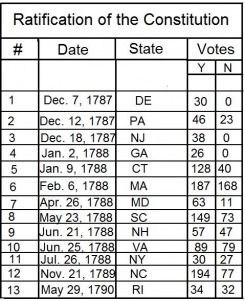
Image result for Ratification list of states

2. Slavery in the U.S. Constitution - yah or nah?
***More on Slavery in the U.S. Constitution - please download and use the class worksheet to organize your ideas and answer the questions. "Why did the founding fathers keep slavery in the Constitution?"

3. Creating the New Constitution:
-Outline Notes - Review and let me know if you have any question.
-Easy-to-Follow US Constitution Guide
-The United State Government - Download this slideshow

Homework:
1. Yes, check Google Classroom.
___________________________________________________


U.S. HISTORY II - Period 3:
Essential Questions:
-Should the United States fight wars to make the world safe for democracy?
-How did a war fought to 'save the world for democracy' end up threatening civil rights in America?
-What happens when individuals’ civil liberties are breached?
-How did World War I change America?
-Was the decade of the 1920's a time of innovation or conservationism?
-Should the USA limit immigration?
-Was the treaty of Versailles a fair and settlement for lasting world peace?

Themes: American Exceptionalism, Isolationism, Interventionism, Causes of World War I

1.  A quick recap of the Essential Questions:
Group A - "Selling the War" - Was it just for the American government to "sell the war" to the American people? How supportive were Americans of selling the war?

Group B - "Attacks on Civil Liberties Increase" - How did a war fought to 'save the world for democracy' end up threatening civil rights in America? What happens when individuals' civil liberties are breached? 

Group C - "The War Encourages Social Change" - Did the social and economic changes that existed in the USA during WWI oppose or support American values? Who benefited and who struggled as a result of America's entry into WWI? 

2. Total War on the Homefront and The End of WWI  - How did American influence the war front? How did The Great War end in 1918? What were the impacts of WWI?

3.  Tell me who, what, where, and why? + pages 598-600 in your Textbook


3. Read and review the website on the link on InfluenzaWhat impact did it have on Americans? Please watch the movie below to help you understand its impact.


5. Please review the resources below and answer the question: "Why didn't the Treaty of Versailles lay the foundation for a lasting peace in the world?"
Treaty of Versailles Political Cartoon Activity - Please Complete this in Class.
Treaty of Versailles Slideshow - Please download and review!
Woodrow Wilson Presidential Video - Please watch in class OR for homework.

Homework:
1. Yes, check Google Classroom.
_____________________________________________________

International Studies - Period 4
Essential Questions:
1. How do we think about POWER in the 21st Century?
2. How do we define our interest as a country?
3. What does "hard power" and "soft power" capability and how does it impact foreign policy?
4. How is power distributed?

Themes: War vs. Peace, Sustainable Change, Hard Power, Soft Power, Smart Power

1.  Victor will be presenting his current event on Venezuela.  Please see the Current Events format and Current Event Rubric  review it CAREFULLY, as both should guide your lesson on Current Events.

2. What is Power? What events did you find online that represents Power Events of today?

"Ultimately, the only power to which man should aspire is that which he exercise over himself."                                          Elie Wiesel, prisoner at Buchenwald. 

"Simply put, power is the ability to effect the outcomes you want, and if necessary, to change the behavior of others to make this happen.

                                                       Joseph S. Nye Jr., 2002

3. Students will have a jigsaw activity where one member of the group becomes the "Captain" and the Captain will travel to other groups to explain their findings and then the remaining group members teach the "Captain" about their own topic on:

I. Student 1: Please read the Research Institute for European and American Studies (RIEAS) article "Being Hard on Soft Power" and answer the following questions:
A. Compare and contrast how this article views soft power and hard power? Which is it more critical of and why?
B. Summarize this articles' viewpoints on the United States Army in Iraq?

II. Student 2: Please read Hillary Clinton's perspective on Power
A. What is America's Role in the World?
B. What is critical for America, Europe and the World in the 21st Century?
C. Summarize this articles' viewpoints on global power, which countries are emerging?

III. Student 3: Please read Harvard Kennedy School and Joseph Nye article "Lesson's Learned Since 9/11: Narratives Matter"
A. How should we challenge terrorism according to Joseph Nye?
B. How did 9/11 change America's foreign policy approach?

4. Video on Joseph Nye: A TED Talk with Joseph Nye, July 2010


A portrait of Hillary Clinton at her desk

5. Hard Power and Soft Power Readings and Resources:
Homework:
1. Yes, check Google Classroom. 

Monday, December 5, 2016

Day 58 - Monday

U.S. History I - Periods 1, 2 & 7: 
Essential Questions:
-When is revolutionary change justified?
-What does it mean to have a representative government and live in a democratic society?
-Why were states afraid of centralized authority and a strong central government post-American Revolution?
-What does every strong government need?

Themes: Federalist, Anti-Federalist, Balance of Powers, Federalism, Separation of Powers, Thomas Jefferson and John Adams.

1.  Two Videos:
Strong versus Weak Governments - Thomas Jefferson in John Adams, an HBO mini-series


Image result for Federalist states versus Anti-Federalist States

2.  Quick Understanding of Drafting the Constitution
-Who were the 55 delegates?
-Who were the key players?
-What was the biggest debate over Small States and Big States?
-Slavery in the U.S. Constitution - yah or nah?
***More on Slavery in the U.S. Constitution - please download and use the class worksheet to organize your ideas and answer the questions. "Why did the founding fathers keep slavery in the Constitution?"

3. Creating the New Constitution:
-Outline Notes
-The United State Government

Homework:
1. Yes, check Google Classroom.
___________________________________________________


U.S. HISTORY II - Period 3:
Essential Questions:
-Should the United States fight wars to make the world safe for democracy?
-How did a war fought to 'save the world for democracy' end up threatening civil rights in America?
-What happens when individuals’ civil liberties are breached?
-How did World War I change America?
-Was the decade of the 1920's a time of innovation or conservationism?
-Should the USA limit immigration?
-Was the treaty of Versailles a fair and settlement for lasting world peace?

Themes: American Exceptionalism, Isolationism, Interventionism, Causes of World War I

1.  Your jigsaw activity and mini-presentations to each of your group mates will begin today. Everyone will have 10 minutes to organize their thoughts and ideas on how they will execute their presentation to the other groups, but remember you will need to show me that you have demonstrated clear understanding of your topic and can convey this message to others.

Group A - "Selling the War" - Was it just for the American government to "sell the war" to the American people? How supportive were Americans of selling the war?

Group B - "Attacks on Civil Liberties Increase" - How did a war fought to 'save the world for democracy' end up threatening civil rights in America? What happens when individuals' civil liberties are breached? 

Group C - "The War Encourages Social Change" - Did the social and economic changes that existed in the USA during WWI oppose or support American values? Who benefited and who struggled as a result of America's entry into WWI? 

2. The Homefront Resources:

A. Committee of Public Information:
Did the CPI undermine people's Civil Rights? How did it impact Private Businesses? Did it manipulate the minds of the American Public? Was it an effective use of government funds to sell the war to the nation?
CPI, Sedition Acts, and more - Slideshow
American Propaganda Machine - The CPI and George Creel
President Wilson, George Creel and Charles Gibson and the CPI
George Creel and CPI
Four-Minute Men
"Food will win the war" - Propaganda and the WIB

B. Civil Liberties/Immigration/Espionage and Sedition Acts:
Did the Espionage and Sedition Acts undermine people's Civil Rights? How? Should it have been overthrown by the U.S. Supreme Court?
CPI, Sedition Acts, and more - Slideshow
-Anti-immigrant hysteria
-Espionage and Sedition Acts
Espionage and Sedition Act of 1918
More on Espionage and Sedition Act from WWI
This has happened before, but 1918 was different!?!?!
Video on Alien-Sedition Acts of 1918
WWI and suppression of dissents

C. WWI - US Economy/Social Change
Social and Economic Changes - Maureen B. Fitzmahn, J.D., A Teacher's Blog
Social and Progressive Changes during WWI - Northern State University
How did the U.S. government gain control over the Economy?
Economics of WWI
War Finance Corp - William McAdoo
Detailed Essay on the War Finance Corp - Great introduction and Graphs/Charts at the end
WWI Era Economics and Transforming American Culture and Economy - Harvard Press

Weapons Americans produced
Shell-Shock in WWI - Video
More Shell-shock

3.  Great Migration - Tell me who, what, where, and why? + pages 598-600 in your Textbook


4. Read and review the website on the link on InfluenzaWhat impact did it have on Americans? Please watch the movie below to help you understand its impact.


5. Please review the resources below and answer the question: "Why didn't the Treaty of Versailles lay the foundation for a lasting peace in the world?"
Treaty of Versailles Political Cartoon Activity - Please Complete this in Class.
Treaty of Versailles Slideshow - Please download and review!
Woodrow Wilson Presidential Video - Please watch in class OR for homework.

5. The End of WWI 

Homework:
1. Yes, check Google Classroom.
_____________________________________________________

International Studies - Period 4
Essential Questions:
1. How do we think about POWER in the 21st Century?

2. How do we define our interest as a country?

3. What does "hard power" and "soft power" capability and how does it impact foreign policy?

4. How is power distributed?

Themes: War vs. Peace, Sustainable Change, Hard Power, Soft Power, Smart Power

1. Zach will be presenting his current event on  Current Events format and Current Event Rubric should be reviewed CAREFULLY, which both should guide your lesson on Current Events.

2. What is Power? What events did you find online that represents Power Events of today?

"Ultimately, the only power to which man should aspire is that which he exercise over himself." 
                                                                   Elie Wiesel, prisoner at Buchenwald. 

"Simply put, power is the ability to effect the outcomes you want, and if necessary, to change the behavior of others to make this happen.
                                                       Joseph S. Nye Jr., 2002

3. Students will have a jigsaw activity where one member of the group becomes the "Captain" and the Captain will travel to other groups to explain their findings and then the remaining group members teach the "Captain" about their own topic on:

I. Student 1: Please read the Research Institute for European and American Studies (RIEAS) article "Being Hard on Soft Power" and answer the following questions:
A. Compare and contrast how this article views soft power and hard power? Which is it more critical of and why?
B. Summarize this articles' viewpoints on the United States Army in Iraq?

II. Student 2: Please read Hillary Clinton's perspective on Power
A. What is America's Role in the World?
B. What is critical for America, Europe and the World in the 21st Century?
C. Summarize this articles' viewpoints on global power, which countries are emerging?

III. Student 3: Please read Harvard Kennedy School and Joseph Nye article "Lesson's Learned Since 9/11: Narratives Matter"
A. How should we challenge terrorism according to Joseph Nye?
B. How did 9/11 change America's foreign policy approach?

4. Video on Joseph Nye: A TED Talk with Joseph Nye, July 2010


A portrait of Hillary Clinton at her desk

5. Hard Power and Soft Power Readings and Resources:
Homework:
1. Yes, check Google Classroom.